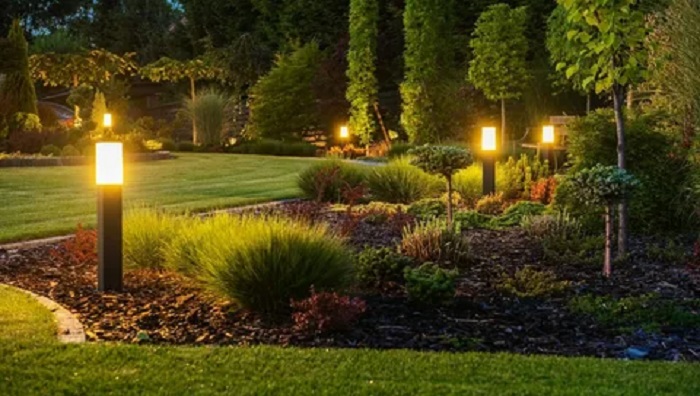
Garden and park lighting makes a site safer and more convenient: it illuminates paths, steps, entrance areas, perimeters, and seating areas. Properly selected lamps help navigate in the dark and simultaneously create an atmosphere – from a calm, country-style feel to a modern, minimalist style.
When choosing on https://leduastore.com/street-lighting/, it’s important to consider not only the appearance but also the operating conditions: humidity, temperature fluctuations, soil quality, the presence of trees and shrubs, and ease of maintenance. A set of several lamp types usually works better than a single, all-purpose option.
How to Choose Lights for a Garden or Park
For functional and long-lasting lighting, consider a combination of characteristics rather than just one parameter:
- Purpose of the area: paths require soft, glare-free light, while work areas require brighter, more directional light.
- Rating: for outdoor lighting, choose housings designed for rain and dust; For ground-mounted solutions, the requirements are usually higher.
- Material and coating: aluminum with a high-quality paint finish, stainless steel, and composites better withstand moisture and chemicals.
- Light source: modern LED solutions are energy-efficient, last longer, and provide stable light without frequent lamp replacement.
- Color temperature: warm light is suitable for relaxation and landscaping, while neutral light is suitable for paths and functional areas.
- Safety and electrical: outdoor lines require proper cabling, sealed connections, and automatic protection.
- Consistent style: repeatable shapes and finishes create a cohesive look, even with different types of luminaires.
A practical approach is to create a simple lighting scheme: mark traffic routes, key objects (entrance, parking lot, gazebo), hazardous areas (steps, elevation changes), and accent points (trees, ponds, sculptures). After this, it’s easier to choose a kit and avoid overpaying for excess power.
Selecting suitable models by type, height, power, and design is easy through the street lighting online store, where you can compare specifications and assemble a kit for specific tasks.
The optimal result is achieved by combining general lighting for orientation, localized task lighting, and accent lighting for decorative objects. This creates a striking appearance and is convenient to use at any time of day.
Purpose of Outdoor Lighting: Paths, Accents, Security
Outdoor lighting in the garden and on the property serves three key purposes: it helps navigate paths and entrances, highlights landscape elements, and improves security. Properly distributed luminaires create a comfortable environment and allow for the use of the space after dark.
When choosing, it’s important to consider scenarios rather than just «general brightness»: where you walk daily, what you want to highlight visually, and which areas require monitoring. Then light will become a functional tool, not a random collection of lamps.
Practical Light Distribution by Task
- Pathway and Navigation Lighting: Uniform, moderate light without glare; priority – steps, turns, elevation changes, gates, and entrance areas.
- Accent Lighting: Directional light to highlight trees, wall textures, ponds, and small architectural features; fewer fixtures, but more precisely placed ones, are better.
- Security: Perimeter lighting, utility areas, parking, and access points; Motion sensors and twilight switches for automatic activation are useful.
- Pathways: Choose luminaires with soft diffusion and protection from precipitation, positioning them so that the light falls on the pavement rather than into the eyes.
- Accents: Use localized sources with a narrow/medium angle, directing the light toward the object rather than the sky; avoid glare on windows and adjacent areas.
- Security: Create «light spots» in potential risk areas and ensure visibility of cameras/locks/house numbers when needed.
Bottom line: Well-thought-out street lighting is a balance between ease of movement, landscape expression, and site security. First, define the zones and scenarios (pathways, accents, security), then select the types of luminaires for each task – this will ensure a system that is both beautiful and practical.