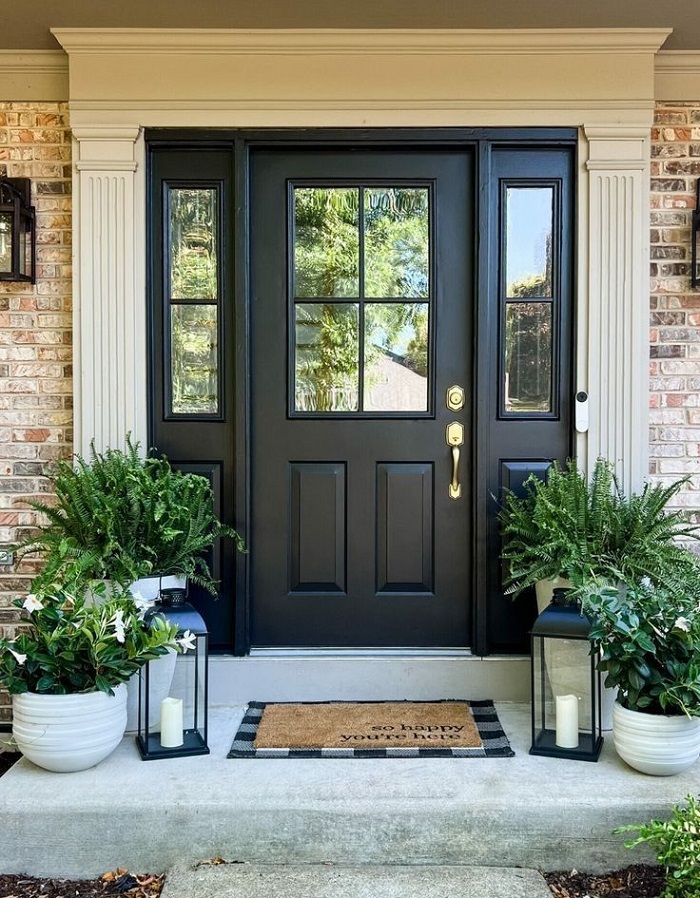
The front door has always been a home’s handshake with the street. It sets the tone before anyone steps inside. But in 2026, the front door is doing more than greeting visitors. Homeowners are treating it as a design statement, blending bold colour choices with modern materials and hardware that would have seemed out of place just a few years ago.
Bold Colour Is Back
The era of safe beige and standard white front doors is fading. This year’s most popular exterior palettes feature deep, saturated tones: navy blue, forest green, matte black, and rich burgundy. These colours create contrast against lighter siding and brick, drawing the eye immediately to the entryway.
Matte black remains the single most requested front door colour in new construction and renovation projects across North America. Its popularity ties into the broader trend of black-framed windows and dark exterior accents that lend a contemporary, architectural feel to both modern and traditional homes.
For homeowners who want warmth without going neutral, stained wood-grain finishes on fiberglass doors have become a compelling option. Modern fiberglass can replicate the look of mahogany, walnut, or oak with remarkable accuracy, while offering weather resistance and insulation that solid wood cannot match.
Glass and Light
Decorative glass inserts are having a significant moment. Full-length sidelites, transom windows above the door, and oversized glass panels within the door itself are all trending upward. The goal is to flood the entryway with natural light while maintaining privacy through textured, frosted, or art glass options.
Wrought iron glass inserts offer a particularly striking look, combining the security and visual weight of ironwork with the brightness of glass. These designs pair well with both contemporary and Mediterranean-inspired exteriors. Canadian door specialists such as Optima Windows & Doors offer extensive catalogues of decorative glass options from manufacturers like Novatech and Trimlite, giving homeowners a wide range of patterns and privacy levels to choose from.
Pivoting and Oversized Entries
Standard 36-inch doors are being replaced by wider, taller entries wherever the architecture allows it. Oversized single doors (42 to 48 inches wide) and pivot-style entries create a dramatic sense of arrival. Pivot doors, which rotate on a central axis rather than side hinges, have become a hallmark of high-end residential design and are increasingly accessible at mid-range price points.
Double-door entries remain popular for larger homes, particularly when paired with coordinating sidelites. The proportions matter here: the most visually balanced installations use doors and sidelites that align with the roofline and the scale of the facade.
Hardware as Jewellery
Front door hardware has evolved beyond the basic brass lockset. Matte black lever handles, brushed nickel pull bars, and even unlacquered brass that develops a natural patina over time are all in demand. Smart locks with keypad or biometric entry are being integrated into these designs, blending technology with traditional aesthetics rather than replacing them.
Oversized handle sets and statement knockers are another trend gaining traction, especially on larger doors where standard hardware can look undersized and lost.
Materials That Last
Steel and fiberglass dominate the market for good reason. Steel doors offer superior security and a clean, smooth surface that takes paint well. Fiberglass doors resist denting, do not warp or rot, and can be finished to mimic wood grain convincingly.
The choice between the two often comes down to climate and budget. Steel is the more affordable option and works well in moderate climates. Fiberglass handles temperature extremes better, resisting expansion and contraction that can warp or crack a door over time. For homeowners in regions with harsh winters, fiberglass with a polyurethane foam core provides both durability and insulation.
The front door may be one of the smallest surfaces on a home’s exterior, but its impact on the overall look and feel is outsized. Getting it right, from colour and material to glass and hardware, is one of the most cost-effective ways to elevate a property’s presence.