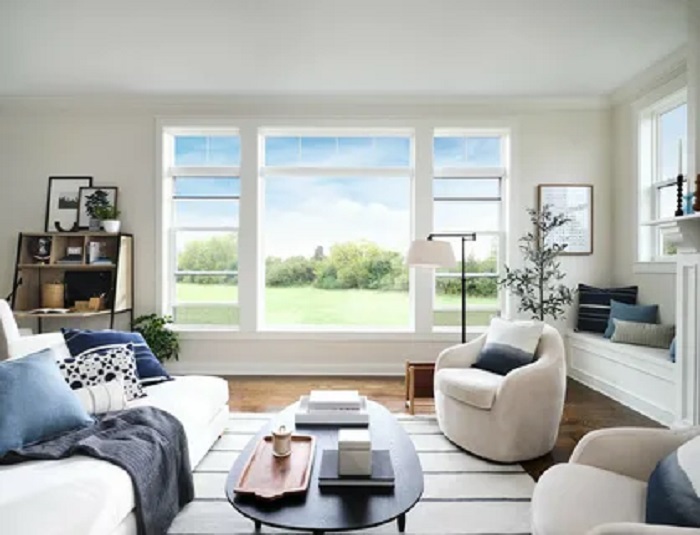
Window replacement can significantly change a home’s appearance, natural light levels, and everyday comfort. However, a harmonious result depends on more than just the characteristics of individual windows. It’s far more effective to consider windows as part of the overall building design: consider the room’s purpose, the façade architecture, furniture placement, ventilation requirements, and the specific features of the window opening.
This approach is especially effective when using bay windows. For example, vinyl bay windows can become the focal point of a living room or dining room, adding light and visually expanding the space. However, other rooms don’t always require such large-scale solutions—sometimes it’s more practical to choose a compact design with easy opening and the necessary level of privacy. More information is always available on https://dwellifyhome.com/blog/sponsored/how-vinyl-bay-windows-fit-into-a-smarter-chicagoland-exterior-upgrade/.
Window Replacement as Part of an Overall Home Renovation
When renovating a façade, it’s important not to treat each window as a separate purchase. The frame color, sash shape, decorative elements, and trim should all be coordinated.
This is especially important for homes in Chicagoland due to the variety of architecture and climate conditions. A large window in a living room has very different operational requirements than a small structure in a bathroom or a window over a kitchen sink.
Therefore, when choosing, it’s important to consider not only the appearance but also the location of the specific opening. Some rooms require maximum daylight, while others require effective ventilation or privacy.
When replacing windows, it’s best to begin by analyzing the rooms.
It’s helpful to first determine how each room is used. In the living room, a wide view and good lighting may be important. In the kitchen, ease of opening is paramount, especially if the window is located above the countertop. For the bathroom, privacy and controlled ventilation are more important.
In the bedroom, the design should be convenient for daily use and meet applicable safety and emergency exit requirements. In the hallway, natural light may be sufficient, so a fully opening sash may not be necessary.
Replacing only the visible portion of the window without addressing the source of the problem will not necessarily produce the desired result. Therefore, it’s advisable to evaluate the condition of the opening before choosing a specific model.